August 2026, SCIDFoundation.org

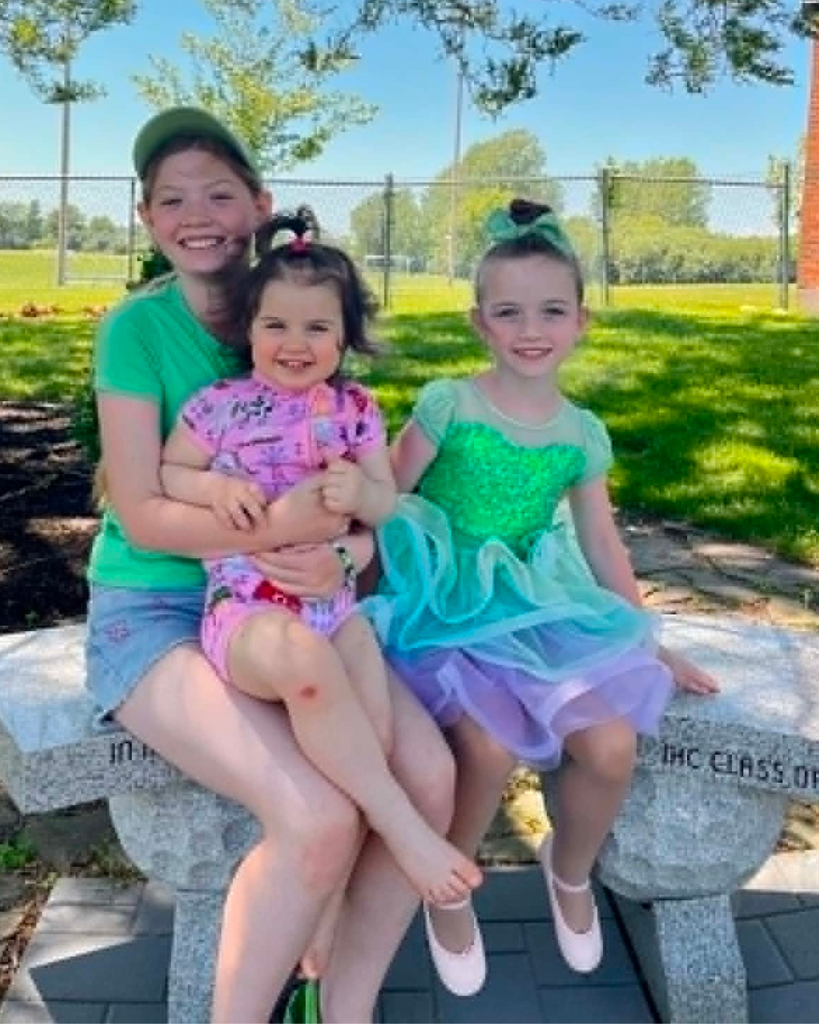
It’s difficult to wallow when Etta bursts into the room with her infectious giggle and Jack Sparrow run.
In This Month’s Spotlight 

Etta’s Journey – Every family hopes for the day life begins to feel “normal” again after transplant. Etta’s story is a heartfelt reminder that while the path forward may not be the one we envisioned, it can still be filled with courage, laughter, and moments worth celebrating.
Pediatric Medical Traumatic Stress – Many parents have wondered, “Why do I still feel this way?” New research suggests those lingering feelings after a child’s serious illness may be more common than we realize and deserve to be acknowledged.
Articles Recently Published by the PIDTC: Links to two new articles on SCID, which were recently published.
Patient Stories
Meet Etta RAG1 SCID
By: Lindsey, SCID Mom
Our sweet Etta was born September 5, 2024. She is the youngest of three girls. When she was about nine days old, we got the dreaded call that her newborn screening was positive for SCID. We isolated immediately while we worked to transfer her care out of state. Living in what is essentially a medical desert isn’t ideal when your child has a rare genetic condition. Despite our best efforts, Etta ended up catching parainfluenza and was admitted on October 25th.
In early November, a perfect match was found through NMDP (National Marrow Donor Program). I highly encourage everyone to join the registry. It turns out our wonderful donor is a doctor at another children’s hospital working in oncology.
November 29, 2024, was transplant day, one day before her big sister’s 4th birthday. Chemotherapy and transplant were not easy for Etta. She had a lot of pain requiring significant amounts of narcotics, and a lot of vomiting that caused a severe oral aversion. This eventually required an NJ (nasojejunal) feeding tube to get her off IV (intravenous) nutrition because her stomach couldn’t handle anything.
She also developed VOD (Veno-occlusive disease) and engraftment syndrome, which landed her intubated (requiring breathing support) in the PICU (Pediatric Intensive Care Unit). This was when we found out she had a mild stroke. Despite all these challenges, she was able to pull through. On January 29th, she was finally discharged to the Ronald McDonald House.
While at the Ronald McDonald House, our main goals were to get her feeding and get her off all the narcotics. I was allowed to try breastfeeding at this point because my tests for CMV (Cytomegalovirus) all came back negative. By some miracle, I got her breastfeeding again. It wasn’t enough to ditch the tube, but it was something. Weaning off the narcotics was a slow process. We were also working really hard to get her moving her body now that she was more alert.
She was, and still is, the hardest-working kiddo I know.
As her cell counts continued to go up, so did my hope for her future. I really believed we were almost done with this medical journey. On April 17th, we were finally able to go home. Getting to be together as a family after seven long months was indescribable. It is still one of the best days of my life.
With Etta being our third baby, it was obvious to us that she was, understandably, very behind. We immediately began feeding/speech therapy, occupational therapy, and physical therapy. She did develop GVHD (Graft vs Host Disease) of the skin, but it was pretty easily controlled. Her bloodwork was perfect, and everyone thought she just needed more time to catch up.
Months went by, and unfortunately, she wasn’t catching up. After multiple hearing tests, eye exams, and several meetings with oncology, neurology, and finally a developmental pediatrician, we got some answers. At 18 months, she was given a laundry list of diagnoses, but the most serious were Global Developmental Delay (GDD) and severe autism.
The emotional whiplash of this journey can’t be understated. It’s something I think all of us go through to some degree. There is the absolute joy of having a new baby, followed by the panic of a SCID diagnosis. For us, I was so hopeful after transplant because her bloodwork was amazing, and then I was absolutely shattered once GDD and autism were diagnosed.
We are now close to two years post-transplant. There are still a lot of struggles. Therapy has become my full-time job at this point. She doesn’t eat, she doesn’t talk, she doesn’t interact the way a “normal” toddler would, and she still struggles to use the right side of her body. Her T cells are great, but a recent sudden drop in her B cells is concerning. As with everything else, all we can do is wait and see.
This journey has proven time and time again that nothing is guaranteed. I very naively believed that transplant would be a small hiccup and then life would be back to normal. I was not prepared for the reality of this journey.
As a family, we are still struggling from the trauma of the past two years. Every first holiday was spent apart. I missed milestones and birthdays for my older girls. They are mourning the sibling experience they thought they would have. My husband missed out on the newborn bonding time with our last baby.
I have to be honest and admit that sometimes I feel buried under the weight of it all. It’s a struggle not to dwell. Then my sweet, smiley baby girl snaps me out of it. It’s difficult to wallow when Etta bursts into the room with her infectious giggle and Jack Sparrow run.
Sure, she doesn’t eat, but she ditched her feeding tube and started drinking her formula all by herself. She often tastes new foods and works hard against her hypotonia to chew and manage bites.
Yeah, she doesn’t talk, but she is learning how to use her AAC (Augmentative and Alternative Communication) device and she just started babbling! Don’t assume that because she doesn’t have words, she doesn’t still argue with her sisters, because she absolutely does.
She doesn’t play or interact like a “normal” toddler, but she’s the most hilarious little weirdo who fits right in with our quirky bunch. She struggles with her motor skills and planning, but she walks, runs, jumps, walks backward, spins…the list goes on.
She reminds me every day to let go of the ideas I had for what life would be and just enjoy what is.
She’s here. We are together as a family. She can eat a Cheerio off the floor and not die.
Things are pretty dang good.
Are you a SCID family with a story to share? Let me know. Email me at barb.ballard@SCIDFoundation.org.
Pediatric Medical Traumatic Stress in Parents of Children with Medical Complexity
If you’ve ever felt shaky walking back into the clinic where your child was treated… if an ordinary illness in your child can trigger a flood of memories… if you’ve felt guilty over needing a break… if you’ve cried in a hospital parking lot and then wiped your face and walked back in like nothing happened, you are describing something real. It has a name, and researchers are just beginning to study it in families like yours.
What is Pediatric Medical Traumatic Stress?
Pediatric Medical Traumatic Stress (PMTS) refers to the psychological and physiological reactions parents and even children can have to illness, injury, medical procedures, and treatment experiences. It isn’t the same as everyday worry. It describes a pattern of trauma responses that can develop from living through frightening, high-stakes medical events, and it can look a lot like post-traumatic stress: intrusive memories, hypervigilance, avoidance of medical settings, sleep disruption, and a sense of dread that doesn’t fully go away even after a crisis has passed.
What a Recent Study Found
A 2023 study by Dewan and colleagues, published in Child: Care, Health and Development, was the first to explore PMTS in parents of children with medical complexity. The researchers interviewed 22 parents and identified three major sources of traumatic stress:
- The unique burden of the role itself. Parenting a medically complex child means becoming a case manager, a home nurse, a medication scheduler, and an advocate, often all before you’ve recovered from the shock of diagnosis.
- Interactions with the healthcare system that can wound or protect. The same conversation, delivered two different ways, can deepen a parent’s sense of safety or leave a lasting scar. Small moments with providers carried enormous weight; a rushed explanation or dismissed concern, vs, a moment of real listening.
- Systemic factors that set the stage for trauma. Long waits for answers, fragmented care between specialists, and having to repeat your child’s story over and over again all compound the strain.
Importantly, the researchers found it wasn’t usually one catastrophic event driving parents’ distress, it was the accumulation of repeated stressful experiences over time.
Why This Matters Even More for SCID Families
No study has yet looked specifically at PMTS in parents of children with Severe Combined Immunodeficiency (SCID), but there’s good reason to think the unique realities of SCID can intensify many of these feelings:
- The diagnosis arrives out of nowhere. Thanks to newborn screening, many SCID diagnoses are made in a baby who looks perfectly healthy. Parents go from “everything is fine” to “your child could die from a common cold” in the space of a single phone call.
- Isolation is prescribed, not incidental. Protective isolation, restricted visitors, and avoidance of ordinary places (friends, churches, even extended family gatherings) cut parents off from the very support systems that normally ease stress.
- The treatment itself is high-stakes. Decisions about hematopoietic stem cell transplant, gene therapy, or enzyme replacement come early and fast, often while parents are still absorbing the diagnosis itself.
- Vigilance doesn’t end at discharge. Protective isolation usually continues at home. Long after transplant or treatment, many SCID parents describe living in a heightened state of anxiety. Every fever, every rash, even a single cough can reactivate the original fear.
Each of these factors intensifies, the themes identified in the Dewan et al. study of medically complex children.
You Are Not Alone
If any of this resonates, please hear this clearly: what you’re feeling is a recognized, real, and shared experience, not a personal failing.
You don’t have to carry this alone or in silence. A few gentle next steps:
- Talk to your child’s care team about how you’re doing, not just how your child is doing. Many hospital systems have psychosocial support staff who understand medical trauma.
- Connect with other SCID families through the SCID Foundation. Peer connection is one of the most consistently protective factors described in this research.
- Consider professional support from a therapist familiar with medical or family trauma, if these feelings are affecting your daily life, sleep, or relationships.
Naming this experience is often the first step toward healing.
This article is based on an article by: Dewan, T., Birnie, K., Drury, J., Jordan, I., Miller, M., Neville, A., Noel, M., Randhawa, A., Zadunayski, A., & Zwicker, J. (2023). Experiences of medical traumatic stress in parents of children with medical complexity. Child: Care, Health and Development, 49(2), 292–303. https://pmc.ncbi.nlm.nih.gov/
If you are struggling with your mental health, please know that support is available. Reach out to your care team, a mental health professional, or a crisis line. The National Alliance on Mental Illness (NAMI) has a Caregiver Support line available 10am to 10pm eastern time at 1-800-950-NAMI (6264) Press “4” to connect with a skilled Family Caregiver HelpLine Specialist or Text “Family” to 62640.
Articles Recently Published on SCID from the PIDTC
Newborn screening reduces survival disparities in SCID after stem cell transplant: A PIDTC report Newborn screening helps identify SCID before babies get sick. A new study found that without newborn screening, Black and Hispanic babies with SCID were less likely to survive than non-Hispanic White babies. Today, with newborn screening catching the disease early, that gap has disappeared, meaning early detection helps every baby survive, regardless of race.
Abstracts from the PIDTC Annual Scientific Workshop A collection of abstracts from the 2026 Annual Workshop of the Primary Immune Deficiency Treatment Consortium (PIDTC)
Moving Forward, Together
This month’s newsletter reminds us that the SCID journey doesn’t end with treatment. Healing takes many forms, whether it’s celebrating hard-earned milestones, recognizing the emotional impact of medical trauma, or supporting research that helps us better understand and improve life after diagnosis.
Your generosity allows the SCID Foundation to walk alongside families every step of the way through education, support, advocacy, and a growing commitment to research.
Together, we are helping shape a future where every SCID family has the knowledge, support, and hope they deserve.
Know someone in the SCID Community who could use our news?
Encourage them to Sign up!