
April 2026, SCIDFoundation.org
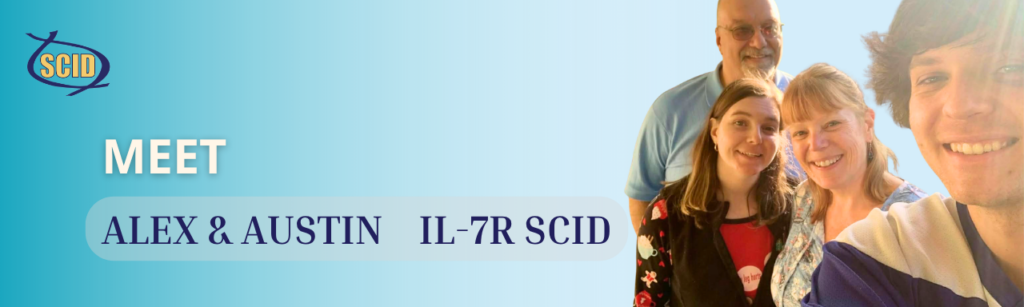
While Alex’s journey involved significant challenges, Austin’s experience with SCID was very different
— yet both paths shaped who they are today.
In This Month’s Spotlight 

Alex & Austin’s SCID Journey – A powerful story from parents raising two children with IL-7R SCID, each diagnosed in very different ways. From a delayed diagnosis and life-threatening complications to early detection and a smoother path, their journeys highlight resilience, advocacy, and the lifelong impact of early diagnosis.
Advancing SCID Through Collaboration – The SCID Foundation was proud to represent SCID families at the Primary Immune Deficiency Treatment Consortium Scientific Workshop, where researchers, clinicians, and advocates came together to share progress, discuss challenges, and shape the future of treatment for primary immunodeficiencies.
SCID Foundation Resources – Learn about vital resources to help families and patients find support and stay informed.
Patient Stories
Meet Alex & Austin
By: Donna, SCID Mom
Tim and I are the parents of two children with SCID, Alex, who was diagnosed at nine months old, and Austin, who was diagnosed at birth. Because of their very different paths to diagnosis, there are stark differences in their SCID journeys.
Our children were born before there was a newborn screening test to detect SCID. Our journey with SCID began when our beautiful daughter, Alexandria (Alex), became very sick. As first-time parents, we had to advocate on her behalf and push for answers. This led to a very late diagnosis. As a result, Alex spent many months at Duke University Medical Center (Duke) where she received her bone marrow transplant. During her stay at Duke, she spent two months on life support, fighting for her life. During this time, Alex suffered a massive stroke to the right side of her brain. You can only imagine how devastating this was for our family. By the grace of God and the wonderful doctors at Duke, Alex survived. Unfortunately, as a result of the stroke, she has many lifelong challenges to cope with, including left side arm paralysis, balance issues, abnormal gait, and cognitive disabilities.
As a child, Alex attended special education classes and received physical, occupational, and speech therapy. Those earlier years were especially challenging for her, but with her fighter personality, she never gave up. In fact, in kindergarten, she received an award for being the most persistent. As parents, Tim and I were always proud and amazed at even the smallest accomplishment that any other typical parent may have taken for granted. For example, riding a bike took many months of practice, but when Alex finally learned to ride the bike without training wheels, we, along with the entire cul-de-sac of neighbors and friends, were there cheering her on.
Throughout school, Alex struggled and overcame many obstacles. She learned to read and write, but math was always, and continues to be, a struggle. To this day, even simple addition is challenging for her.
As she got older, Alex became interested in sports and earned the honor of joining the Special Olympics team. This became the community where she would thrive.
Alex graduated from high school with her peers and friends, but instead of a diploma, she received a certificate of attendance. Nobody in the audience knew the difference. Along with her grandparents and brother, Tim and I were just as proud as everyone else at graduation.
We feel fortunate to live in a state with strong services for adults living with disabilities. After graduation, Alex attended the Networks School for Employability, where she learned valuable skills to help with entering the workforce. She attended a Flower Works program from age 18-21, where she learned to arrange flowers and participated in deliveries. During this time in her life, since the disabilities prevented her from driving, we started the process to obtain paratransit services. Thankfully, she was approved. These services allow her to move more independently.
At the age of 21, we proudly watched her graduate from the Networks School for Employability. Shortly after graduation, she began attending Elwyn, a program for adults with intellectual and developmental disabilities. There, the wonderful staff assisted Alex in a job search. Through Elwyn, she was introduced to Aramark, the nutrition service provider at the University of Delaware, where she was hired! She was also assigned a wonderful job coach, Allen. Allen works with Alex at her job site and keeps her on task as she cleans tables, works in the dish room, and sometimes serves students. Allen calls me weekly to provide updates on how Alex has done at her job. She works part-time, 16 hours a week, taking paratransit to and from work. She has been at her job for nine years and absolutely loves it!
Alex has transitioned from child SSI to adult SSI (Supplemental Security Income, a program administered by the Social Security Administration). She lives at home with Tim and me while enjoying time with her friends and her boyfriend, Eric. She continues to be involved with Special Olympics and annually attends the Night to Shine Dance, an event for adults with disabilities sponsored by the Tim Tebow Foundation. Now 31 years old, she recently became an athlete leader for Special Olympics in the State of Delaware.
We couldn’t be prouder of her and all that she has overcome. She is a very friendly, outgoing, confident, and strong-willed young lady!
While Alex’s journey involved significant medical and developmental challenges, Austin’s experience with SCID was very different.
In contrast to his sister, Austin was diagnosed as a newborn and had an uncomplicated bone marrow transplant at two weeks old at Duke.
As a child, Austin enjoyed playing baseball and was a Boy Scout. He excelled in school and was in the gifted and talented program. In high school, Austin took AP courses and graduated with a 3.8 GPA. He earned a partial scholarship to the University of Delaware, which he attended for two years before changing career paths and attending trade school for HVAC in Boynton Beach, Florida.
Today, Austin is living and working for a large HVAC company in Palm Beach County, Florida, and his employer is paying for his journeyman classes. He is currently halfway through a four-year program.
Now 27 years old and living independently, Tim, Alex, and I enjoy visiting Austin often in Florida. We are proud of the young man he has become and the independence he has achieved.
PIDTC Annual Scientific Workshop
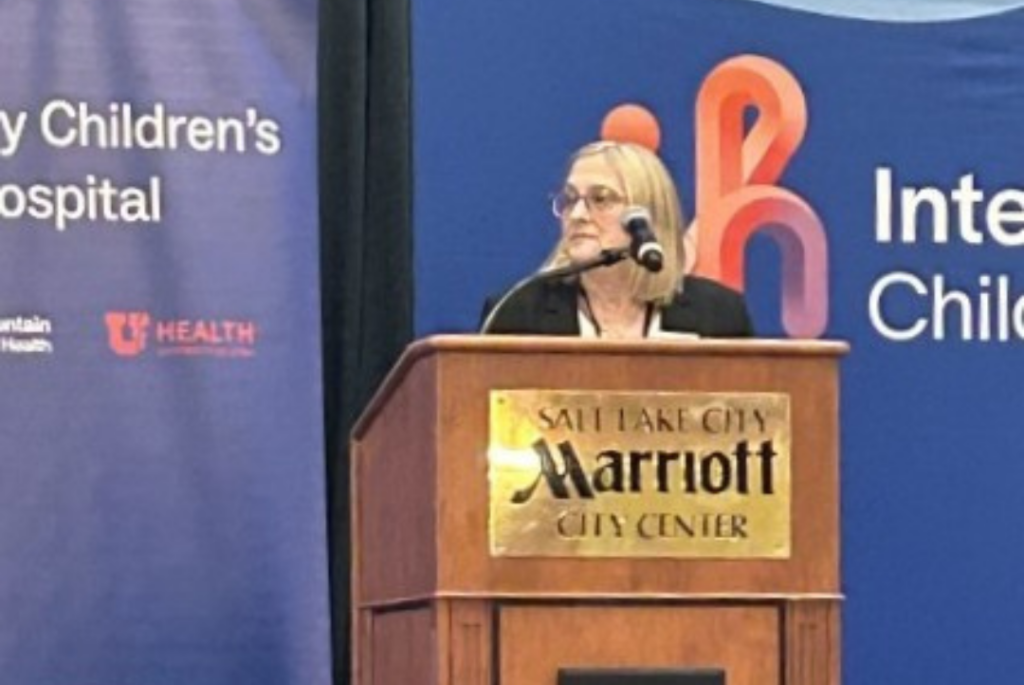
I had the honor of attending the 15th Annual Scientific Workshop of the Primary Immune Deficiency Treatment Consortium (PIDTC) in Salt Lake City, Utah.
The PIDTC is a network of expert medical centers across North America working together to improve care for people with rare, inherited immune system disorders like SCID.
Because these conditions are so uncommon, most hospitals see very few patients, so the PIDTC brings specialists together to share knowledge, study treatments, and track outcomes through a centralized registry (a secure database of patient information used to improve care).
For families, this means better access to experienced doctors, clearer answers about treatment options like stem cell transplant or gene therapy, and more opportunities to participate in research that is shaping the future of care.
As President of the SCID Foundation, I was proud to represent the SCID community and share our perspective on patient engagement in SCID research. I spoke with PIDTC members about our past and ongoing collaborations, including the Survivorship Survey of Adult SCID patients.
Bringing the patient and family voice into research discussions is so important—our goal is to help researchers understand where more patient-reported data is needed to improve treatments and quality of life for people living with SCID, as well as their caregivers.
This is why it is so important that SCID patients and families communicate and engage with the SCID Foundation. We cannot represent your voice unless we hear from you.
~Barbara Ballard, Founder and President
SCID Foundation
Finding Connection in the SCID Community
Navigating a SCID diagnosis is a journey best shared with others. The SCID Foundation offers several vital resources to help families and patients find support and stay informed:
chatSCID: Moderated Zoom meetups: Virtual based face-to-face connection for patients and caregivers at all stages of the SCID journey.
Private Facebook Group: A secure, moderated environment for families to share experiences and build lasting peer support.
Newsletter & Social Media: Regular updates on research, webinars, and inspiring family stories delivered via email and social media.
Building a strong network helps transform shared challenges into collective strength. You can explore these resources and join the conversation at the SCID Foundation’s Connect with Community page.
Let’s Shape the Future Together
Every share, every story, and every gift changes the landscape for those living with SCID.
By staying connected through our social channels and participating in creative fundraising, you ensure our educational resources and scholarships continue to reach those who need them.
Your involvement, in any form, strengthens our impact and provides a lifeline of knowledge for our community. If you have a story to tell or a new way to support our mission, I’m only an email away.
Know someone in the SCID Community who could use our news?
Encourage them to Sign up!