
May 2026, SCIDFoundation.org
Service is not only about rebuilding homes or cleaning communities but also about listening, being present, and recognizing the humanity in every person we meet.
In This Month’s Spotlight 
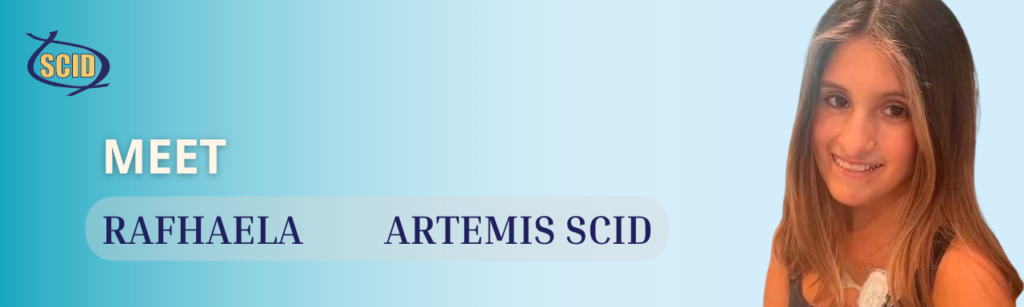
What did you do for Spring Break? – For Spring Break 2026, Rafhaela, an Artemis SCID patient, choose to serve on a mission trip to an area of North Carolina still experiencing the after effects of a damaging hurricane. Travel along with her as she shares her journey of service and growth.
Family Planning – Family planning for families affected by SCID can feel complex and emotionally layered. Let’s step through the concerns.
chatSCID – Are you a SCID patient or parent? chatSCID is for you. Join us for connection, support, and real conversation. Mark your calendar for two upcoming gatherings, including a special June session celebrating the dads who walk this journey too.
Patient Stories
Meet Rafhaela
By: Rafhaela, Artemis SCID patient
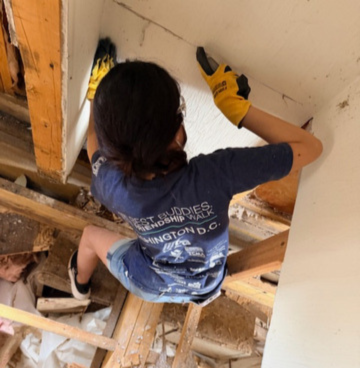
I chose to spend my 2026 spring break giving back to others and serving the community. This past spring break, I had the opportunity to travel to Black Mountain, North Carolina, as part of a mission trip with Marymount University and in partnership with Catholic Mission Trips (CMT). This was also my second mission trip serving with my church and school community, which made the experience even more meaningful because it allowed me to continue growing in service and faith alongside people who shared similar values. The welcoming spirit of the North Carolina community and the resilience of the people we encountered made the experience even more impactful.
My desire to serve others began long before this trip, as it stemmed from growing up with a disease and facing many personal challenges. In my earliest months of life, I underwent chemotherapy and two bone marrow transplants. These early challenges shaped my understanding of resilience, gratitude, and faith. This trip became a reminder of how those experiences now allow me to give back with a deeper sense of purpose.
One of the most impactful parts of the journey was how it strengthened my faith. Being surrounded by fellow students and a priest from our university created a space of reflection, peace, and spiritual growth. Stepping away from daily routines allowed time for prayer, conversation, and presence within nature. The beauty of the mountains in western North Carolina also brought a sense of peace that made moments of reflection even more meaningful. It reminded me that faith grows stronger when shared.
One challenge I faced during the trip was constantly being mindful of my health. I had to ensure that my lungs, especially at high elevations, would not cause shortness of breath, and I also had to maintain proper nutrition to avoid fainting. However, I learned that these limitations do not define my experience. With care and mindfulness, I was still able to fully participate in each moment.
A central part of the trip was service to the community of Black Mountain after it was impacted by Hurricane Helene in September 2024. I had the opportunity to help clean debris, support rebuilding efforts, and meet residents affected by the storm. I was shocked to hear that more than a year later, some families still had no homes, stray dogs were wandering in search of their families, and some families were living in houses damaged by mold and water.
One story that stayed with me was a family whose home had been filled with black mold after the storm. They had lost nearly everything, including loved ones and their only source of income. The owner had made and sold jewelry for a living, and after the hurricane, both their home and livelihood were taken away. Hearing their story reminded me how disasters impact not only physical spaces, but also identity, stability, and dignity.
Throughout the trip, I also heard many stories of survival, faith, and resilience from members of the community. Despite everything they had endured, many people still greeted us with kindness, gratitude, and hope, which left a lasting impact on me.
Each encounter reminded me that every person carries a story worth hearing. These conversations taught me that service is not only about rebuilding homes or cleaning communities, but also about listening, being present, and recognizing the humanity in every person we meet.
In the end, this trip was far more than a spring break. It was a journey of faith, service, and connection. It reminded me that growth often happens in conversations, shared stories, and moments of reflection. I returned home with a fuller heart, grateful for the experience and inspired to continue carrying these lessons forward in my everyday life.
Family Planning and SCID: Understanding Options, Risks, and Support for the Future
Today, families have more tools than ever to understand risk and explore reproductive options, yet family planning in the context of Severe Combined Immune Deficiency (SCID) can still feel complex and emotionally layered.
SCID and Genetic Inheritance
SCID may be inherited in several ways depending on the gene involved. Because of these differences, one-size-fits-all answers do not apply.
X-linked SCID:
In X-linked SCID, mothers are typically carriers without symptoms, and affected children are essentially always male. The mutation is passed from mother to child. When the mother is a confirmed carrier the likelihood of another child being affected is:
- 50% chance of an affected male child
- 50% chance of a carrier female child
Autosomal Recessive SCID:
Autosomal Recessive forms of SCID occur when both parents are typically carriers, each carrying one healthy copy and one non-working copy of the same gene. Consequently, the SCID child inherits two non-working copies of the same gene, one from each parent. Both boys and girls can be affected. For each pregnancy the risk associated with having another child is:
- 25% chance (1 in 4) of an affected child
- 50% chance (1 in 2) of a carrier child (not affected)
- 25% chance (1 in 4) of an unaffected, non-carrier child
Key point: this risk is the same for every pregnancy, regardless of the baby’s sex.
“De Novo” or New Mutations – When SCID Occurs Spontaneously:
In some instances, SCID is caused by a de novo mutation, meaning the genetic change occurred for the first time in the affected child and was not inherited from either parent. This happens most often in X-linked SCID, because a male child has only one X chromosome, so only one new mutation event is needed. However, new mutations can occur in autosomal SCID genes, so it is possible that boys and girls can be the first in their family to be affected with SCID.
For families in this situation, several important points may apply:
- There is usually no prior family history of SCID
- If the mutation occurs spontaneously in the egg, sperm, or early embryo, parents are not carriers, and their own genes do not show any mutation
- The risk of recurrence in future pregnancies is generally low, but not always zero. Rarely, gonadal mosaicism may exist, meaning a parent may carry the mutation in a small percentage of reproductive cells without it showing in blood testing
- In some families an X-linked SCID mutation may occur in a female, but because females have two X chromosomes the female with a single mutation would have normal immunity. However, her sons would be at risk for inheriting SCID from her mutated X chromosome
Because of this complexity, genetic counseling remains important even when SCID appears to be de novo. Reproductive planning may still include prenatal testing in future pregnancies for reassurance and early detection.
When No Genetic Cause Is Found
Some children are diagnosed with SCID without a confirmed genetic mutation, even after extensive testing.
This may happen because:
- The responsible gene has not yet been discovered
- The mutation exists in a region not captured by the testing that was performed
- The change is difficult to detect with available methods
In these cases:
- Inheritance patterns may be unclear
- Recurrence risk is estimated rather than precisely defined
- It may not be possible to determine a child’s SCID status until after birth
Reproductive Options
Depending on the situation, families may consider:
- Natural conception with or without prenatal testing (Chorionic Villus Biopsy, CVS, or amniocentesis), preparing for the possibility of another baby with SCID, and testing the newborn immediately after birth
- In Vitro Fertilization (IVF) with genetic testing, also known as Pre-implantation Genetic Testing for Monogenic disorders (PGT-M), may be possible when a mutation is known
- Using donor egg or sperm with fertilization in vitro (“outside the body”, typically performed in a lab) or using an unrelated healthy embryo followed by implantation and pregnancy in the mother
- Adoption of a child who does not have SCID
Not all options are available or appropriate for every family, which is why individualized guidance is essential.
The Importance of Support and Counseling
Family planning decisions after a SCID diagnosis are rarely made with complete certainty. This is why connecting with the right specialists can be critical.
A genetic counselor and a clinical immunologist familiar with SCID can help families:
- Understand recurrence risk in a meaningful, personalized way
- Interpret genetic testing results, including limitations
- Determine whether additional or updated testing is needed
- Explore reproductive options based on medical and personal factors
- Coordinate care with fertility or high-risk pregnancy specialists
For families dealing with de novo or genetically unexplained SCID, this guidance is especially important.
Genetic science continues to evolve rapidly. New SCID-related genes are still being discovered, and testing technologies are improving year after year. What is unknown today may become identifiable in the future.
For families living in uncertainty, this progress matters. Advanced genetic testing (such as whole genome sequencing) may be recommended as technology evolves.
Key Takeaways
Even when genetic results are unclear or newly emerging, risk assessment is still possible, but it must be individualized. A genetic counselor is the key partner in understanding what SCID means for your family, not just SCID in general.
The SCID Foundation remains committed to supporting families with education, connection, and resources at every stage of this journey. Continued research, awareness, and community involvement help improve outcomes and expand possibilities for the future.
chatSCID

chatSCID is a monthly one-hour virtual meet-up designed for SCID caregivers and adult patients at any stage of their journey.
May chatSCID!
Spring is in full bloom, and so is our SCID community connection.
Join us for May chatSCID on Tuesday, May 19th at 8:00 PM EDT, 7:00 PM CDT, 6:00 PM MDT, or 5:00 PM PDT for an open, supportive space to connect, reflect, and talk together.
Registration is free and open to all SCID families.
SAVE THE DATE for our special June chat SCID because June is for Dads!
This June, chatSCID is celebrating the incredible fathers, stepfathers, grandfathers, and father figures in our SCID community 
Too often, the spotlight naturally falls on moms as caregivers—but dads carry so much of this journey too. The late-night worries. The hospital stays. The strength during transplant. The advocacy. The quiet moments of fear, hope, and determination. This month, we’re making space for their stories.
Monday, June 22nd, 8:00 PM EDT, 7:00 PM CDT, 6:00 PM MDT, or 5:00 PM PDT.
And to all the moms reading this: encourage your guy to join!
You Make the Difference
For families facing SCID, everything can change in an instant. In those moments, what they need most is connection, understanding, and hope.
That’s what you help create.
The SCID Foundation exists because people choose to stand with families in one of the most vulnerable times of their lives. Your support brings comfort in uncertainty, guidance in confusion, and strength when everything feels overwhelming.
It reminds families they are not alone—and never have to be.
Whether you give, volunteer, or simply share our mission, you are part of something deeply powerful: a community that turns fear into hope, and isolation into support.
Together, we are changing what it feels like to face SCID.
Know someone in the SCID Community who could use our news?
Encourage them to Sign up!